The Question Everyone is Asking
Let me answer the question directly: No, I’m not telling you to abandon Christianity.
But I am asking you something harder: Question it. Examine it. Interrogate it honestly.
After I published “Why I’m Learning My Own Culture at 40,” some responses were encouraging—people said they felt the same awakening. But there was also a question that kept surfacing, laced with anxiety:
“So are you saying we should abandon Christianity?”
Here’s what I’m actually saying: Before you defend Christianity so fiercely, ask yourself if you ever truly chose it.
Were you given a choice? Or were you baptized as an infant—no consent required? Were you raised in it, conditioned by it, surrounded by it until it became the only reality you knew? Were you taught that everything outside of it was demonic, backward, evil—before you even understood what “it” was?
Most Igbo Christians have never genuinely chosen Christianity. We inherited colonial conditioning. We were initiated into the faith before we could speak, programmed before we could think critically, and told that questioning it was sin.
And here’s the part that troubles me most: We defend this faith passionately while knowing almost nothing about what our ancestors believed before it arrived. We can quote Bible verses but can’t explain Igbo cosmology. We know Christian theology but dismiss Igbo philosophy as demonic—without ever studying it.
You can’t claim to have chosen Christianity over Igbo tradition when you were never taught what Igbo tradition actually is. Meanwhile, you were taught Christianity from birth.
If you’d been initiated into Igbo traditions as early and as thoroughly as you were into Christianity, you’d probably be a traditionalist. But you weren’t given that option. You were given one path, told it was the only path, and warned that all other paths led to hell.
That’s not a choice. That’s coercion.
So this article isn’t about whether Christianity and Igbo identity can coexist. It’s about something more fundamental: Can we finally be honest about how we got here?
What I’m Actually Saying
Let me be clear about my position, because I know this will be uncomfortable for some of you.
I’m not telling you to leave Christianity. I don’t have that right. Your faith journey is yours. If Christianity gives you genuine spiritual fulfillment—not just inherited comfort, but real connection—then that’s between you and God.
But I am telling you this: You need to question what you believe and why you believe it. And you need to do it honestly, not defensively.
Here’s what I think you should do:
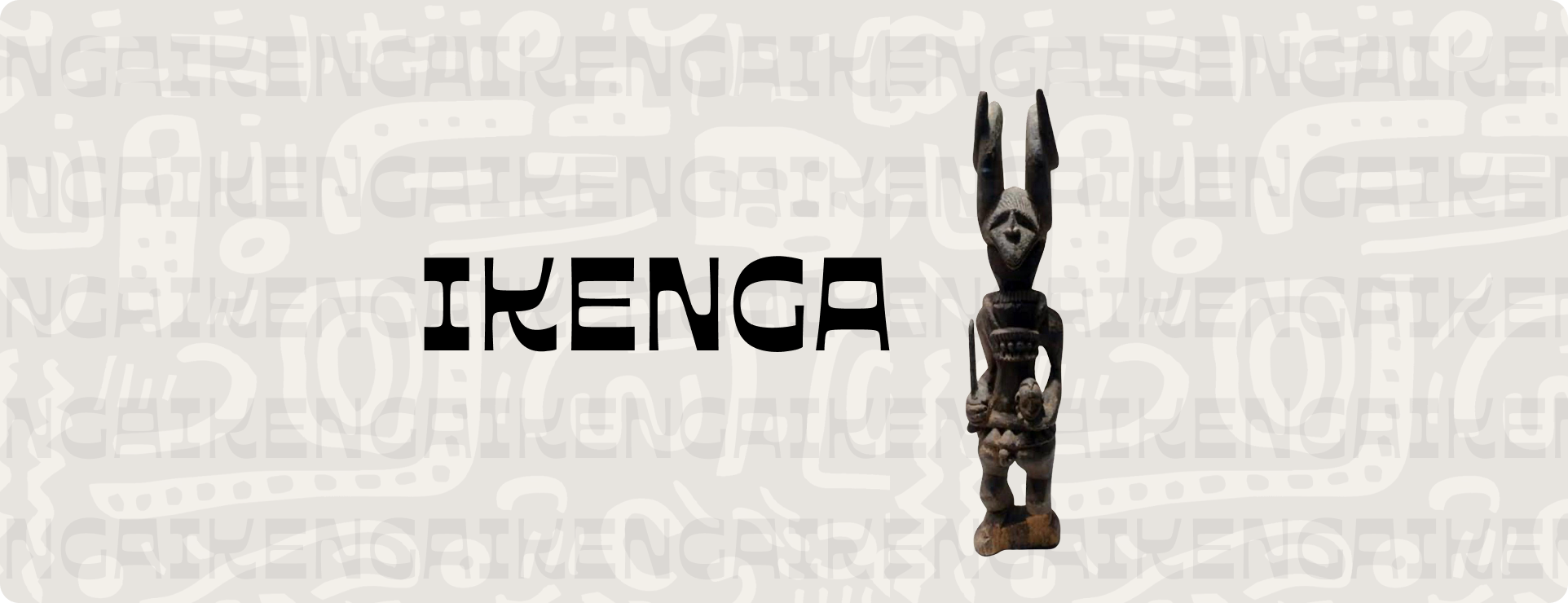
Study Igbo cosmology. Not to convert to traditional religion, but to understand what you’re rejecting. Learn what chi means. Learn what Ikenga represents. Learn about Ani, Amadioha, Ofo na Ogu. Understand the philosophy, the ethics, the worldview that guided our ancestors for centuries.
Ask elders while they’re still alive. Do your research-nothing beats your own findings. Read. Listen. Learn.
Interrogate the inconsistencies in Christianity—logically, not emotionally. The contradictions that exist. The way the same book has been used to justify slavery and oppose it. The way every denomination claims exclusive truth from the same text. The way Christianity has been weaponized throughout history. The way it was used specifically to colonize and control us.
If you’ve always believed everything in the Bible as the word of God, agreed with every teaching, never had a single doubt or question—you probably haven’t truly examined your faith. You’ve inherited it. And there’s a difference.
Before dismissing every Igbo tradition as demonic, ask yourself: Have you tried to understand the philosophy behind it? Or are you just repeating what you were taught to believe?
Here’s the truth some of you aren’t ready to hear: Christianity is a colonial religion that was forced on us. Not invited. Not chosen freely. Forced—through a combination of economic pressure, social coercion, and systematic demonization of our own cultures.
You’re defending a faith your ancestors were tricked and coerced into accepting. I was baptized Catholic at one month old. Born October 19, baptized November 24 same year. A baby. Was my consent needed? No. So were most Catholics I know. The programming started before we could speak.
And it worked. The fact that you know Bible verses but not Igbo cosmology proves the colonization was successful.
Again, I’m not asking you to abandon your faith. I’m asking you to examine it honestly.
And I’m asking you to learn what was taken from you before you dismiss it. Know both systems. Understand both worldviews. Then make an informed choice. But don’t defend what you were forced into while rejecting what you were never allowed to understand.
That’s not faith. It’s called conditioning.
For Those Who Are Questioning Like Me
I understand that some of you aren’t ready to question your faith. And that’s okay.
But for those of us who are here now—awakening, questioning, feeling the dissonance between what we were taught and what we’re discovering—I want you to know you’re not alone.
I know the fear. The shame. The embarrassment of admitting doubt. I know what it’s like to worry about what your family will think, what your church members will say, and how you’ll be judged.
I’ve stood in front of altars and preached at Christian gatherings. Those who knew me back then can attest to this. I’ve led prayers. I’ve defended the faith. And now I’m here, publicly questioning it. Do you know how much courage that took? Do you know the cost?
But here’s what I’ve learned: Pretending feels worse.
How long will you pretend? How long will you perform faith you’re not sure you feel? How long will you defend beliefs you’re not sure you hold? How long will you silence your questions to keep the peace?
The awakening is happening. Thousands of us are quietly questioning. Privately researching. Secretly wondering if everything we were taught might not be the whole truth.
You’re not crazy. You’re not sinning. You’re not losing your way.
They lied to you. And you're waking up.
And that’s terrifying. I know. Because once you start asking questions, you can’t unhear the answers. Once you see the contradictions, you can’t unsee them. Once you understand how colonization worked, you can’t pretend it didn’t happen.
But here’s what I’m offering: Community. Honesty. Space to question without judgment.
Through THE CATALYST, I’m documenting this journey. Not because I have all the answers—I don’t. But because I refuse to pretend anymore. And I think you’re tired of pretending too.
So let’s be honest. Let’s ask the hard questions. Let’s learn what we were never taught: Our philosophy, cosmology, the concept of Chi, our proverbs. Let’s examine what we were told never to question.
And let’s do it together.
The False Binary - How Colonization Worked
The idea that you must choose between Christianity and Igbo identity isn’t theological—it’s colonial strategy.
When missionaries arrived in Igboland, they didn’t just preach a new religion. They came with a calculated system designed to break our cultural cohesion and make us dependent on European systems. And Christianity was the most effective tool in that arsenal.
Here’s how it worked:
Step 1: Demonize everything indigenous.
Missionaries didn’t distinguish between Igbo religion and Igbo culture. They bundled everything together—worship practices, governance systems, language, art, philosophy, ethics, even our names—and declared it all demonic.
The shrines? Evil. The ancestors? Lost souls. The language? Primitive. The governance? Backwards. The philosophy? Satanic. Everything that made us us was repackaged as spiritual danger.
This wasn’t theological analysis. This was psychological warfare. If you can convince a people that everything about them is evil, they’ll beg you to replace it.
Step 2: Required total erasure as proof of conversion.
Accepting Christianity wasn’t enough. New converts had to prove their commitment by destroying their past:
∙ Burn the shrines but set up alters
∙ Renounce the ancestors but accept and pray to christian saints
∙ Abandon traditional names (take“Christiannames”)
∙ Stop speaking Igbo in some mission schools (Punished for speaking vernacular)
∙ Reject traditional governance and dispute resolution (Introduced the queen’s bench)
∙ Treat unconverted family members with suspicion (If your brother or sister don't convert, avoid them)
Conversion wasn’t just spiritual transformation—it was cultural annihilation. And it was required. You couldn’t keep Christianity and Igbo identity. You had to choose one.
But here’s the crucial part: this wasn’t what Christianity required. This was what colonialism required.
Jesus was Middle Eastern. The early church spread through Africa, Asia, the Middle East—absorbing and incorporating local cultures, languages, and traditions. Christianity didn’t demand that Ethiopians stop being Ethiopian or that Egyptians stop being Egyptian.
So why did Igbo people have to stop being Igbo?
Step 3: Create economic and social incentives for conversion.
The colonial system made sure that advancement required assimilation, for example:
∙ Mission schools (education) required conversion
∙ Colonial jobs favoured Christians
∙ Trade advantages went to converts
∙ Social status shifted to those who “civilized” themselves
∙ Traditional leaders who resisted lost power and influence
So it wasn’t just spiritual pressure. There was economic coercion too. Your children’s future depended on accepting the new system.
Step 4: Make converts enforce the system.
This was the genius of it: once the first generation converted, they zealously became the enforcers. They taught their children to fear tradition. They destroyed what remained of indigenous systems. They out-zealoted the missionaries in rejecting anything Igbo.
My parents’ generation inherited this. By the time they were raising us, the churches had perfected the maintenance system: constant sermons about “not going back to Egypt,” testimonies of people “delivered from ancestral curses,” warnings about “dabbling in tradition.”
We internalized the colonizer’s contempt for ourselves. And we passed it on.
Step 5: Erase the memory that there was ever a choice.
The final step was making people forget that Christianity was imposed. Make it seem natural, inevitable, obviously superior. Make it seem like our ancestors chose it freely after careful consideration. No, that was not the case.
Because they didn’t choose freely. They were coerced—economically, socially, psychologically. And we were never given a choice at all. We were baptized as infants and raised in a system that presented Christianity as the only valid worldview. I touched this in my first essay.
The either/or—Christianity OR Igbo identity—was manufactured. It was colonial policy, not theological necessity.
And the tragedy is: we’re still enforcing it. Long after the missionaries left. Long after independence. We’re still treating Igbo culture as incompatible with Christianity. We’re still doing the colonizer’s work.
The question isn’t whether Christianity and Igbo identity can coexist.
The question is: Why are we still believing the lie that they can’t?
Wake up. The colonizers won. They convinced us to erase ourselves. And we’re still doing it—this time voluntarily, enthusiastically, righteously.
It’s time to stop.
What Studying Igbo Cosmology Looks Like in Practice
So what does this actually look like in practice? How do you study something you were taught to fear?
Start with curiosity, not commitment.
You’re not converting to traditional religion. You’re learning about your heritage. You’re studying a philosophical system. You’re understanding what your ancestors knew. That’s not spiritual betrayal—it’s education.
Here are concrete steps you can take:
1. Ask the elders while they’re still alive.
Find the oldest people in your family, your village, or your community. Ask them:
∙ What did our ancestors believe about chi? About destiny and personal agency?
∙ What does Ikenga mean? How did it guide achievement and ambition?
∙ What role did Ani (the earth goddess) play in justice and community ethics?
∙ What were the traditional governance systems? How were disputes resolved?
∙ What do our proverbs teach? What wisdom is encoded in our language?
Record these conversations. Document them. These elders won’t be here forever, and when they’re gone, the knowledge goes with them.
2. Read what scholars have written.
There are Igbo academics, anthropologists, and historians who’ve documented our cosmology and philosophy. Read them:
∙ Chinua Achebe’s novels (especially Things Fall Apart, Arrow of God)
∙ Academic works on Igbo religion and philosophy
∙ Historical accounts written by Igbo scholars, not just colonial observers
Learn what was actually believed, practiced, and valued—not the distorted version you were taught in church.
3. Learn the language deeply.
Igbo philosophy is embedded in Igbo language. You can’t fully understand the concepts without understanding the words that carry them. The language shapes how we think about community, destiny, achievement, justice.
Study Igbo seriously. Not just greetings and pleasantries, but the depth—the proverbs, the idioms, the concepts that don’t translate into English. Speak and teach them to your children. If you're in the diaspora enrol them in online Igbo Language School. There are many of them out there.
4. Attend cultural festivals—not as a tourist, but as a student.
Go to Iwa Ji (New Yam Festival). Go to Iri Ji Ohuru. Not to perform culture, but to understand it. Watch the rituals. Ask what they mean. Learn the symbolism. Understand the philosophy embedded in the celebrations.
You don’t have to participate in religious aspects if that conflicts with your faith. But you can observe, learn, and appreciate the cultural and philosophical dimensions.
5. Question what you were taught to fear.
Every time you encounter an Igbo traditional concept and your first reaction is “that’s demonic,” stop and ask yourself:
∙ Who taught me to think that?
∙ Have I actually studied this concept, or am I just repeating what I was told?
∙ What’s the philosophy behind it, separate from religious practice?
∙ Would I dismiss Western philosophy this quickly, or do I only apply this standard to my own culture?
6. Join or create learning communities.
You’re not alone in this. There are thousands of Igbo people—especially in diaspora—trying to recover what was lost. Find them. Learn together. Share resources. Discuss what you’re discovering.
Through platforms like THE CATALYST, cultural organizations, through informal study groups—build community around this work.
The goal isn’t to replace Christianity with traditionalism. The goal is to know both systems well enough to make an informed choice about what guides your life.
Right now, most of us only know one system deeply. That’s not a choice—that’s conditioning.
Learn what you were never taught. Then decide what you believe.
But decide from knowledge, not from ignorance disguised as faith.
I’m doing this work myself. I’m interviewing elders. I’m reading the scholars. I’m learning the philosophy I should have been taught as a child. I’m attending festivals with new eyes. I’m questioning everything I was told to accept without examination.
And I’m sharing what I learn through THE CATALYST—not because I have it figured out, but because I refuse to do this alone.
The Invitation
I know this is uncomfortable. I know some of you are disappointed in me for writing this, especially those of you I taught either in catechism classes or in block rosary. I also know others are relieved someone finally said it out loud. But whatever you believe in, what matters most is how you live your life, how you relate to and treat others. And at 40, I definitely know better now than then.
I know the fear. The guilt. The sense that even questioning feels like betrayal. I know what it’s like to wonder if you’re losing your faith or finally finding your mind. I also know what it feels like when everything you believed is crumbling.
I’ve been there. I am there.
This isn’t easy for me to write. I have family who will read this and worry about my soul. I have friends who will distance themselves. I have church members who will pray for my “conversion.” Or reconversion. I know the cost.
But pretending costs more.
So here’s my invitation:
If you’re questioning—question boldly. If you’re researching—research honestly. If you’re doubting—doubt courageously. And if you’re afraid to admit any of this publicly, know that you’re not alone.
Thousands of us are on this journey. And I know this for a fact. We’re learning what we were never taught. We’re examining what we were told never to question. We’re recovering what was taken from us.
You don’t have to stay silent. You don’t have to keep pretending. You don’t have to defend what you were forced to accept.
You can learn. You can question. You can choose—finally, genuinely choose—what you believe.
But you can’t choose honestly until you know what you’re choosing between.
So learn. Question. And decide.
But here’s the question I’ll leave you with: If you’re afraid to study your own culture, who taught you that fear—and why?
Let me know what you discover.







.png)




.svg)


This is an awesome read. Thanks Ifeanyi for putting this out 👏
before-you-defend-christianity-ask-yourself-if-you-ever-chose-it
This is excellent
before-you-defend-christianity-ask-yourself-if-you-ever-chose-it
Important perspective but real freedom is not just questioning what we inherited, it’s also honestly choosing what we still believe after understanding both sides.
before-you-defend-christianity-ask-yourself-if-you-ever-chose-it
This is a bold and necessary conversation. You can’t make an honest choice between two systems if you’ve only been taught one.
before-you-defend-christianity-ask-yourself-if-you-ever-chose-it