This Christmas Eve, I sat at my dining table scrolling through social media as videos from Eastern Nigeria flooded my timeline.
In Enugu, Abia, and Anambra, each state’s government seemed to be competing for the most spectacular Christmas decorations of 2025. The displays were splendid, elaborate, and clearly expensive.
My home state of Anambra delivered. Even the Ochanja Roundabout got itsown Christmas makeover.
My people celebrated with such vigor, such splendor, such pride and joy.
Then a thought hit me like a bucket of ice water on a scorching harmattan day:
We’re now copying Western-style government-sponsored Christmas decorations?
Even this Christmas we celebrate with so much enthusiasm is borrowed and not originally ours.
That uncomfortable pause led to harder questions I’ve avoided my whole life:
If Christmas isn’t originally ours, what is? What do we have that’s authentically Igbo? How did we come to abandon ours for someone else’s?
And the most troubling realization:
I don’t actually know.
Don’t get me wrong—I’m not trying to diminish Christmas. This isn’t an attack on Christians or Christianity either. I did celebrate this Christmas. My childhood Christmas memories are beautiful too. I got my own new Christmas clothes and shoes every year, a tradition my parents never broke, up to my teenage age even when money was tight.
The long drive from the city to the village in mid-December. Visiting extended family, my father’s childhood friends in neighbouring towns, the man he served under as an apprentice (nwa boi) with the attendant organic stories that came with those visits. Those nights we’d spend at my maternal family’s home (the only place we were allowed to sleep over) while my father drove back alone.
The reconnection with kindred, the joy of cousins eating from the same dish, and playing together, the sense of belonging to something larger than ourselves.
Christmas gave us all that. And it still does. The gatherings, the celebrations, the sense of homecoming—these are real and meaningful.
But here is what I couldn’t shake off as I watched those videos: all this beauty, all this spectacle, this homecoming and the joy that follows it is built around someone else’s celebration. And we’ve come to embrace it so deeply and so completely, invested so much emotion and resources into it, that we don’t even notice what we abandoned to make room for it. And it tells me something about people who do not know who they are.
As a teenager, I started viewing Christmas travel differently—not because I lost my innocence, but because of the tragedy that's wrapped in it. Four years straight, someone close to us died in Christmas travel accidents. Families were wiped out on the highway. The joy and the grief became inseparable, both wrapped up in this imported tradition. Even our tragedies are centred around practicing someone else’s culture.
Sitting there at 40 on Christmas Eve, I finally admitted what I’d been avoiding: I don’t know my own culture.
I don’t mean I can’t dance at weddings. I don't mean that I don't wear the Isi-Agu to events or our traditional attire to cultural events. I mean I don’t know the philosophy, the wisdom, the worldview that made us Igbo. I don’t understand the concepts that guided my ancestors’ lives. I can’t explain to my children what it means to be Igbo beyond surface markers like food, clothing, and a language I speak imperfectly.
And the worst part? I didn’t reject this knowledge. I’m not an efulefu—someone who abandons their heritage out of shame. The knowledge was never offered to me. It was actively hidden, deliberately erased, systematically removed before I was old enough to question or choose.
I know I'm not unique in this because I know I'm not the only one adrift. There are millions of other Igbo people—millions of Africans—who are walking around culturally homeless like myself, and most of us don’t even realize it. We think we have identity because we belong to an ethnic group, religion, and a country. But underneath, there’s a void where indigenous knowledge should be, in politics, in science, in education, a void where our identity should be prominently on display but it is not.
We replaced one system with another without questioning whether the replacement was superior. We just accepted it because… well, everyone else did. Because our parents did. Because that’s what was taught in the schools and churches. Because resisting meant being labelled backward, pagan, uncivilized, and so we are afraid of resisting. We are afraid of being our authentic selves because of how others would perceive us.
This is the identity crisis no one talks about. I’m tired of pretending it doesn’t exist. And if you’re reading this and recognizing yourself in these words—you should be tired of pretending too.
So how did this happen? How did an entire generation of Igbo people end up culturally severed from our roots? One thing I know for sure is that it wasn’t an accident. It was systematic, and deliberate. And it started long before I was born, and perfected in how I was raised.
The Education I Received
Let me tell you what I was taught instead.
I grew up Christian. My entire family did. My parents, my brothers, my extended family—everyone. And Christianity wasn’t presented to us as one spiritual path among many. It was presented as the truth, the one and only true path, and everything outside of it was darkness.
We went to church every Sunday. We attended midweek morning masses, observed like sacred rituals. We had family devotions. I memorized Bible verses, sang praise and worship songs before morning devotions, prayed the rosary every morning, and absorbed Christian theology. By the time I was a teenager, I could quote Scripture with ease, explain the doctrine of salvation, and defend the faith against perceived attacks.
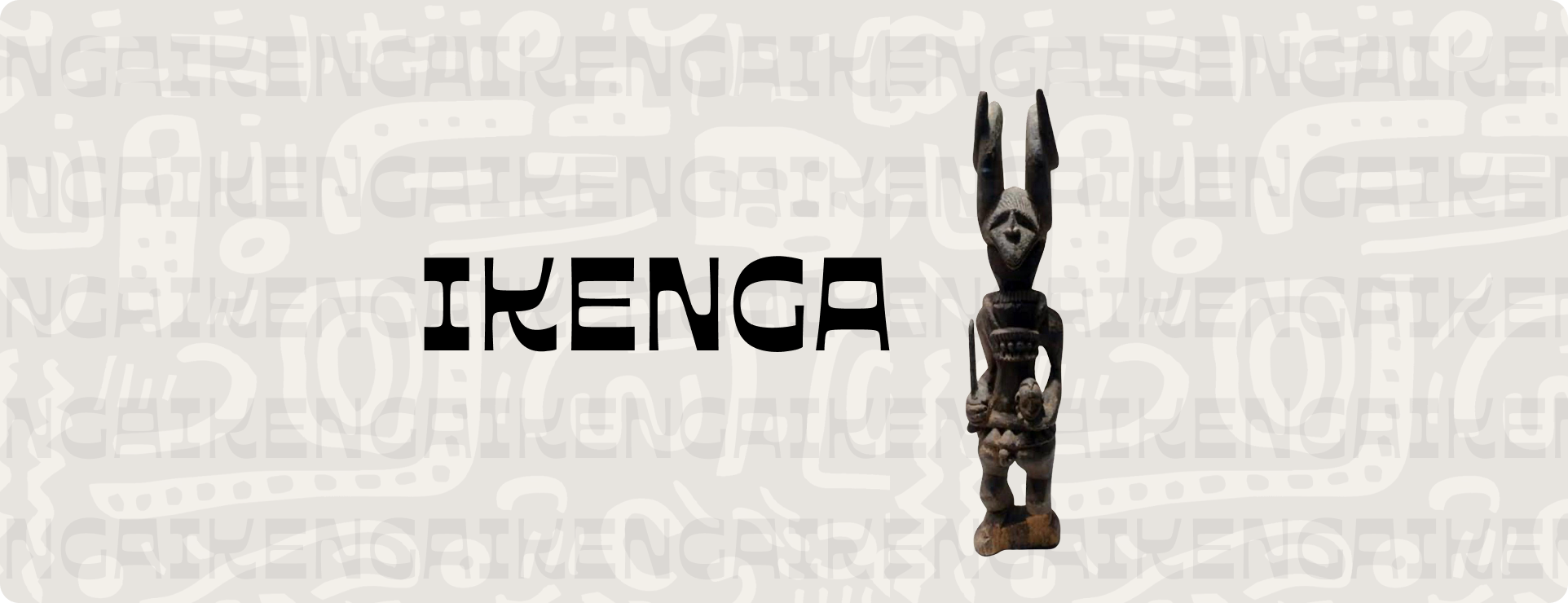
But here’s what I couldn’t do: I couldn’t tell you what Ikenga means. I never knew it existed until recently, and in the most embarrassing way. I couldn’t explain the concept of chi. I couldn’t describe what Ani represents or why she mattered to my ancestors. I couldn’t recite a single traditional Igbo proverb with the depth my grandfather could have. I knew the Ten Commandments but not Ofo na Ogu. I knew Christian theology but nothing of Igbo cosmology. Not even how to break the Kola Nut.
This was not because I was a poor student. It’s because one was taught in a classroom, and the other was deliberately withheld. And as a child, you were not allowed to ask those questions.
In the small Igbo village where I lived with my aunt from ages 7 to 14, I remember exactly one family in that community who practiced traditional religion. Just one. And everything I was taught about them can be summed up in three words: fear, avoid, pity.
We were told they were serving demons. That their shrines housed evil spirits, and that their rituals were witchcraft. That unless they converted, they were destined for hell. We were warned to stay away from their compound, not to eat their food, not to play with their children too closely. Their gods were described as dead—having ears but unable to hear, eyes but unable to see, mouths but unable to speak. We sang these words in Christian gatherings, mocking them with smiles on our faces. The irony was lost on us: if their gods were truly powerless, why did we need to fear them so much?
Yet no one ever taught us what they actually believed. What their cosmology was. What their rituals meant. What wisdom their tradition carried. We were given fear in place of knowledge. Prohibition in exchange for understanding. We were taught to reject something we were never allowed to comprehend.
Looking back, I realize this was the strategy: make sure they feared it before they could understand it. Because understanding might lead to questions. And questions might lead to choices. And they couldn’t risk us choosing anything other than what had been chosen for us.
Here’s what I’ve come to understand: my parents weren’t the architects of this erasure—they were products of it. The systematic removal of Igbo indigenous knowledge didn’t begin with my generation. It began with the missionaries who arrived with a Bible in one hand and colonial backing in the other.
Conversion to Christianity wasn’t just about accepting new beliefs. It required the active destruction of the old. New converts were required to destroy their shrines and set up altars, burn their ritual objects and replace them with the cross, renounce their ancestors and replace them with the Christian saints, and abandon their ritual sacrifices but accept the Christian rituals and sacrifice of the mass. Theirs were presented as holy while ours was called evil.
My parents’ generation inherited this framework. By the time they were raising us, the churches had perfected the maintenance system. Constant sermons about ‘not going back to Egypt.’ Testimonies of people ‘delivered from ancestral curses.’ Warnings about the dangers of ‘dabbling in tradition.’ Youth programs, Bible studies, prayer meetings—all designed to keep us firmly within the Christian worldview, never questioning what we’d lost in the exchange.
And it worked. The intergenerational transmission of Igbo knowledge—the natural process by which elders pass wisdom to youth—was severed. The message became clear: you can’t be Christian and Igbo in the traditional sense. You have to choose. And choosing tradition means being labeled pagan, backward, uncivilized—terms that carry real social and economic consequences in the neo-colonial society we still live in today.
The decline is visible across generations. My grandparents knew. My parents knew less. I know almost nothing. And my children? If I don’t do something, they’ll know even less than I do.
The consequences of this are everywhere in my life. Someone mentions Ikenga in a conversation on X-Space, and I nod along, hoping context will reveal the meaning. When I finally looked it up, I was embarrassed to discover that Ikenga is actually a physical object—a carved figure that Igbo men keep in their homes. Something so fundamental to traditional Igbo life, and I’d reached 40 without knowing it existed. A co-worker asks why we’re called Igbo, what makes us different, what our ancestors believed—and I fumble through vague answers about ‘community’ and ‘hard work’ because I don’t actually know the philosophical foundations. I can see in their eyes they expected more, something deeper. I expected more from myself. I attend cultural events and watch the performance of rituals I don’t understand, mimicking movements that should be instinctive but feel foreign.
I speak Igbo imperfectly, struggling with tones and idioms my grandmother wielded effortlessly. I know more English proverbs than Igbo ones. I think and dream in English. I can explain Western philosophical concepts—Cartesian dualism, utilitarian ethics, social contract theory—but I can’t articulate the Igbo understanding of personhood, justice, or cosmic order.
This is what cultural erasure looks like up close. It doesn’t happen dramatically, not by sudden-accident, but by a quiet, persistent emptying of knowledge that eventually creates a hollowness at the center of identity. And the worst part is, for most of my life, I didn’t even notice it was there and neither do most people.
For 40 years, I lived with this absence without naming it. I am fairly successful, educated, Christian, respectable—all the things I was supposed to be. But something was missing, and I couldn’t articulate what it was
The Awakening
This awakening didn’t come suddenly. It accumulated over 12 years of living abroad;12 years of distance that gave me perspective I couldn’t have had while immersed in the system back home.
But living between these worlds revealed what I couldn’t unsee: everything about us is foreign. Education—foreign. Official language—foreign. Government structure—foreign. Religion—foreign. Professional dress, business practices, development models—all imported. And what’s authentically ours? Pushed to the margins, treated as quaint performance, viewed as irrelevant to ‘real’ progress. But are all of our cultures and traditions really irrelevant in this modern world? Do we really believe that nothing good can come out of Africa, our motherland, the birthplace of civilization?
From here, I can see what my people back home can’t or won’t see. I can see that what was destroyed wasn’t entirely evil. I can sense the scam, the calculated intention to dominate. The logic is clear: convince a people everything about them is inferior, backward, demonic—then extract their resources, control their economies, shape their politics, while they thank you for ‘civilizing’ them.
Yes, the missionaries left. The colonial administrators left. But did we let go of their systems, their hierarchies, their religion, their language, their contempt for our own cultures? No. Instead we became enforcers of our own erasure. We celebrate every foreign holiday with enthusiasm while our festivals struggle for relevance. We speak English to our children while Igbo dies. We build churches on every corner while traditional knowledge holders die without passing on wisdom. We chase Western validation in everything while treating our cultural expressions as embarrassing relics.
That Christmas Eve, those videos of government Christmas decorations in Eastern Nigeria crystallized it. When I left 12 years ago, governments didn’t do this. We’ve copied even this—Western municipal displays, complete with artificial snow in a tropical country. I thought: ‘We’ve copied this one too.’ Not with amusement, but with grief laced in confusion. Because it’s not just decorations. It’s everything. We don’t just adopt useful things—we adopt wholesale identities. We don’t just learn—we erase ourselves. And we call it progress.
Christmas decorations were just a symptom. The deeper crisis: I’m no longer sure if I still believe in the Christian God.
I don’t say this lightly. I was raised Catholic. I attended Mass every Sunday. Led and joined my family in saying the Rosary every morning. Defended the faith like a soldier. But doubts accumulated over time. The inconsistencies. The contradictions. The same book justifying slavery and opposing it. Every denomination claims exclusive truth from the same text, with each declaring all others as false religion. The tribalism, judgment, hypocrisy that exists among believers. But beyond Christianity’s internal contradictions, the larger question haunted me: Why did we abandon our spiritual systems for this? Not because ours was examined and found wanting.
I’m not claiming our traditional systems were perfect—but the one we exchanged them for isn’t either, as we can see in how Christianity manifests in our societies today.
What’s most disturbing is the fact that we didn’t choose freely. Because one came with guns, gunpowder, and economic power, promising that acceptance would save us from being treated as subhuman. That’s not enlightenment. That’s coercion.
As I voiced these questions—carefully, then boldly—I discovered thousands of us. Igbo people, African people, quietly questioning. Wondering if we gave up too much. Trying to figure out who we are beneath colonial inheritance. Some of us are angry, some confused, some searching. All grappling with one question: Can we be modern and authentically ourselves? Or must we always choose?
At 40, sitting at my dining table on Christmas Eve in Calgary, thousands of miles from home but still tethered to it, I decided: I’m going to learn what I should have been taught. I’m going to recover what was taken. And I’m going to share what I learn. Not as an expert—I’m starting from near-zero. Not to convert anyone to traditional religion—that’s not my goal either. But as someone seeking Igbo wisdom and philosophy that can inform my life and my daughter’s life. As someone tired of being culturally homeless. As someone ready to name the crisis and act.
The Crises and The Quest
What did we lose in the exchange? It wasn’t just religious practices that were lost, but our entire philosophical framework. The Igbo understanding of personhood, achievement, community, justice. The concept of chi—personal destiny working with individual agency. Ikenga—the principle that success comes through determined effort. Umunna—community responsibility without losing individual identity. Ofo na Ogu—commitment to truth and fairness. These aren’t just religious concepts—they’re life philosophies that guided successful societies for centuries. We traded them for borrowed systems we barely understand, then wondered why we feel unmoored.
This isn’t unique to Igbo people. Every African ethnic group faces this. Yoruba, Zulu, Kikuyu—the same pattern everywhere. Colonial Christianity’s lasting victory wasn’t just political; it was psychological. Programmed and then carefully executed.
We won independence but never achieved cultural sovereignty. Traditional political systems were relegated to irrelevance, culture turned into museum relics. Language death accelerates. Youth can’t communicate with grandparents. Festivals become performances, not lived traditions. Identity reduces to food, clothing, music—surface markers emptied of philosophical depth.
The division runs deep. Christians versus traditionalists. Denominations competing. Diaspora disconnected. Youth searching but finding no coherent answers. We have ethnicity, but do we have identity? We have heritage, but do we know what it means? The question every African must answer: What does it mean to be Igbo or Yoruba in the modern world? Not Igbo-Christian or Yoruba-Muslim, but authentically ourselves. Do we even know anymore?
I’m not trying to return to traditional religion. I’m not interested in idol worship. I’m seeking Igbo wisdom as philosophy—African principles that work independent of religious belief. The values, ethics, worldview that helped our ancestors navigate life successfully. Knowledge that can unify us despite religious differences. Something authentically ours that our children can inherit and be proud of.
This would mean learning from remaining elders while they’re alive. Understanding concepts like Ikenga, not as religious objects but as philosophical principles. Studying proverbs that encode centuries of wisdom. Exploring how traditional governance worked, how conflicts were resolved, how community was balanced with individuality. Taking what’s valuable, what’s practical, what can inform modern life—without requiring anyone to abandon their current faith or reject modernity. Igbo wisdom for Igbo people, whether Christian, Muslim, traditionalist, or none of the above.
The Journey Forward
For me, it starts with honesty: I’m 40 and just learning my culture. I don’t have all the answers. I’ll make mistakes. I welcome your corrections. I’m also inviting you on this journey, not leading from expertise but from genuine seeking. I’ve named 2026 my year of self-discovery
Through The Catalyst, I’ll document what I learn. I’ll interview elders and traditionalists. I’ll explore how Igbo principles apply to modern challenges—business, relationships, parenting, community building. I’ll write about the concepts I’m discovering. I’ll create space for honest dialogue about identity, belonging, and cultural recovery.
This is not about going backward. It’s about going forward with knowledge of where we came from. It’s about making informed choices rather than accepting imposed ones. It’s about our children having access to their heritage, not just their parents’ inherited Christianity. It’s about Igbo people who know who they are, unified by shared values rather than shared trauma.
The vision?: culture that’s lived, not just performed at cultural events. Identity that doesn’t require rejecting progress. Wisdom that works for modern life. Unity despite religious differences. A next generation that can answer ‘Who are we?’ with clarity and pride.
The Invitation
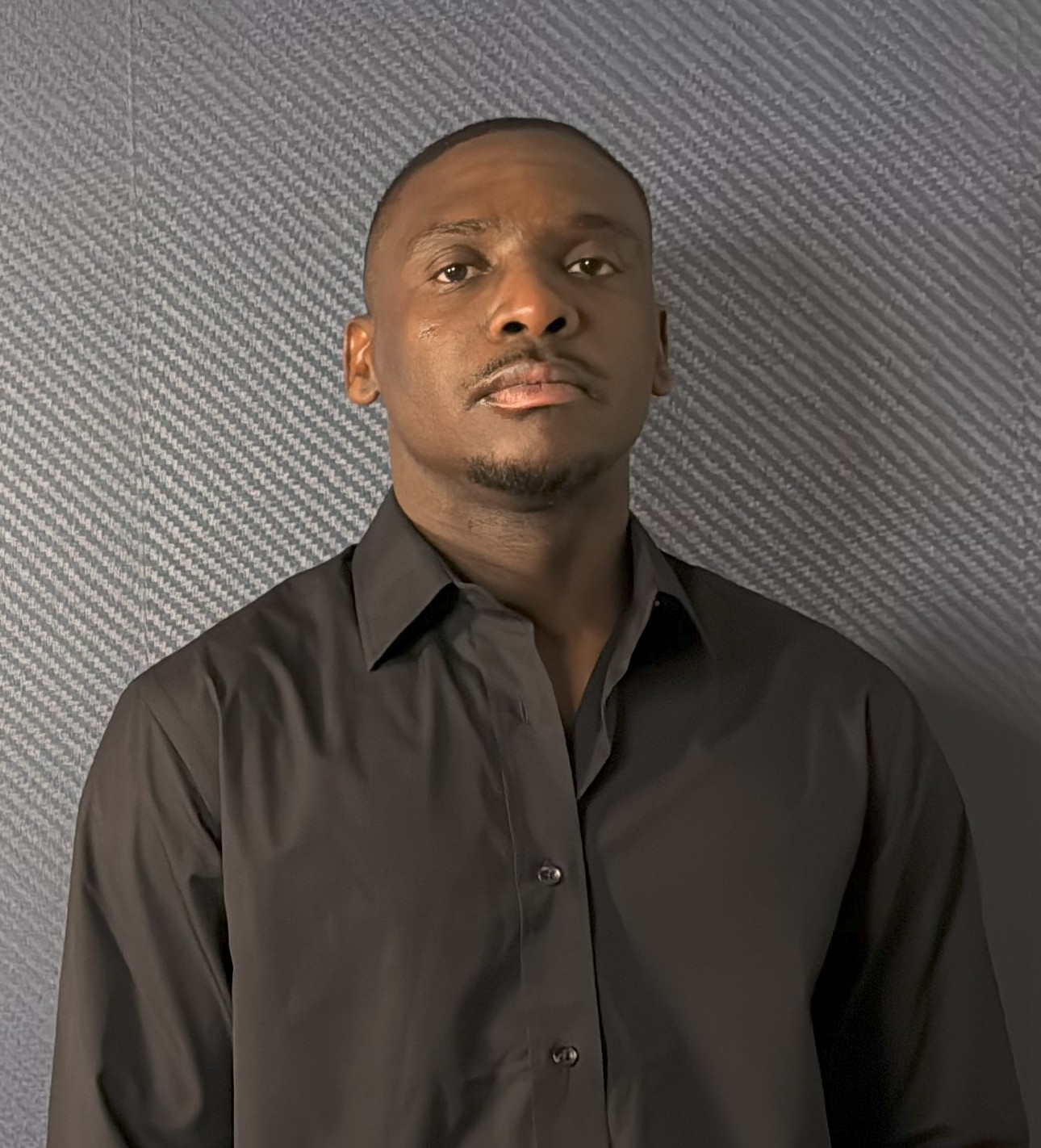
My name is Ifeanyi Nwanonaku. I’m 40 and just learning my own culture. That should embarrass me, but it doesn’t—because I know I’m not alone. Millions of us are here. The embarrassment would be staying here, passing this void to our children.
I refuse to do that.
So I’m learning. And I’m sharing through The Catalyst—not as a teacher, but as a student inviting others to class.
If you’ve felt this hollowness, this sense of cultural drift, this quiet shame at not knowing your people’s wisdom—you’re not alone. It’s not too late. We can recover what was taken. We can learn what we were never taught. We can be proudly Igbo without rejecting modernity. We can have unity without uniformity.
But first, we must name the crisis. We must admit we have a problem. We must decide it matters.
I’m naming mine at 40. I’m deciding it matters for my daughter’s sake, if not my own.
What about you?







.png)



.svg)


Powerful reflection. Really enjoyed reading this!
why-im-learning-my-own-culture-at-40